 blog
blog
EICR vs PAT Testing for Rental Properties Explained
Table of Contents
- EICR vs PAT Testing for Rental Properties: Key Differences
- EICR for Rental Properties: What Landlords Need to Know
- PAT Testing for Rental Properties: When Is It Required?
- Landlord Electrical Safety Regulations: Your Legal Duties
- How Often Should PAT Testing Be Done?
- Is PAT Testing Mandatory for Rental Properties?
- Frequently Asked Questions
Last Updated: 4 October 2026
EICR vs PAT Testing for Rental Properties: Key Differences
When weighing up EICR vs PAT testing, the difference comes down to scope: an EICR inspects the fixed wiring of the whole property, while PAT testing checks individual portable appliances. An EICR is a legal requirement for rented homes; PAT testing is not. This guide from GF Electrical Services explains where each one applies, what the law actually demands, and how to avoid paying for the wrong certificate.
Both sit under the same umbrella of landlord electrical safety regulations, but they answer different questions. One asks whether the building's electrical system is safe. The other asks whether a specific appliance is safe to plug in.
That distinction matters more than most landlords realise, because getting it wrong leads to either wasted money or a compliance gap.
Here is how the two compare at a glance:
| Feature | EICR | PAT Testing |
|---|---|---|
| What it covers | Fixed wiring and installation | Portable appliances |
| Legal requirement for rentals | Yes, every 5 years | No, not for rented homes |
| Who carries it out | Qualified electrician | Competent person |
| Typical outcome | Report with codes C1-C3 | Pass or fail label |
| Frequency | Every 5 years | Risk-based, often annually in commercial settings |
Below, we break down each test, the legal duties behind them, and how often PAT testing should be done in practice.
EICR for Rental Properties: What Landlords Need to Know
An Electrical Installation Condition Report (EICR) is a formal inspection of a property's fixed electrical installation: the wiring, sockets, consumer unit, and earthing. It is the document that proves a rental property's electrical system is safe.
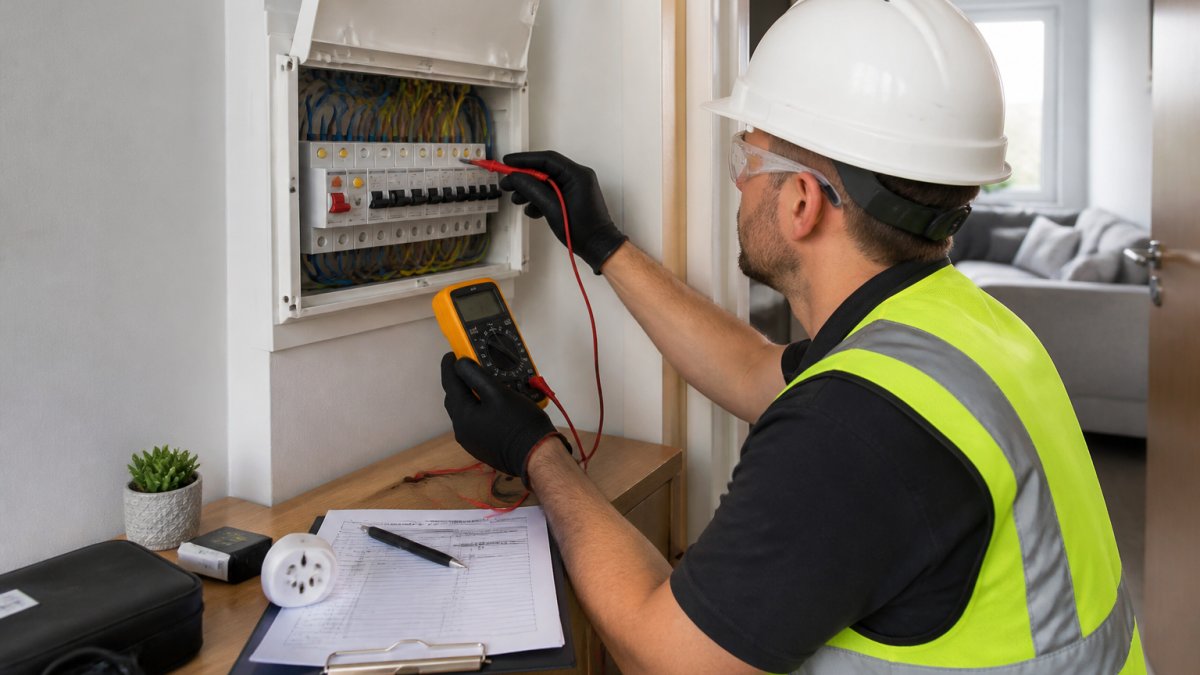
The test produces a report with observations graded from C1 to C3. C1 and C2 codes mean urgent remedial work is needed. C3 means improvement is recommended but not required.
Under the Electrical Safety Standards in the Private Rented Sector (England) Regulations 2020, landlords must have an EICR carried out at least every five years by a qualified person. We recommend booking the inspection before the certificate lapses, not after, because a gap in cover creates a paper trail you do not want during a tenancy dispute.
PAT Testing for Rental Properties: When Is It Required?
PAT testing is not a legal requirement for private rented homes. It becomes relevant when appliances are supplied as part of the tenancy, such as a landlord-provided washing machine, fridge, or kettle, and even then the duty is to ensure the appliance is safe, not to hold a PAT certificate.
Where PAT testing does matter is in Houses in Multiple Occupation and commercial lets. Shared kitchens, communal laundry rooms, and any appliance used by multiple tenants fall into a higher-risk category. In those settings, a documented PAT regime is the practical way to demonstrate you have met your duty of care.
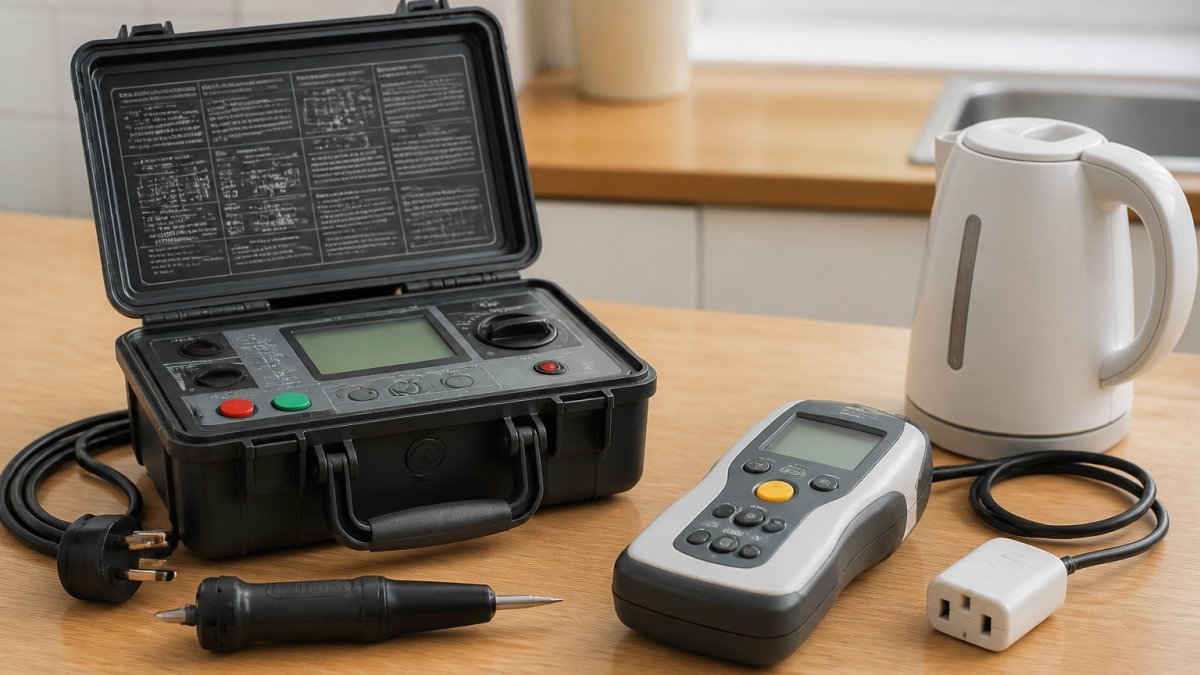
The test itself is simple. A portable appliance tester checks insulation resistance, earth continuity, and polarity, then applies a pass label. It takes minutes per item.
Landlord Electrical Safety Regulations: Your Legal Duties
Landlord electrical safety regulations in the private rented sector rest on three duties: a valid EICR every five years, remedial work within 28 days of a report identifying C1 or C2 issues, and serving a copy of the report on tenants and the local authority on request. Strict adherence to these statutory obligations forms the bedrock of electrical safety compliance, ensuring that broader health and safety regulations are met through a consistent and documented approach.
The 28-day deadline catches people out. If your electrician flags a C2 issue, you cannot simply note it for next year. The work must be completed and certified within the window, and you must retain proof.
Beyond the EICR, landlords also owe a general duty of care under the Health and Safety Executive guidance on electrical safety to keep the installation and any supplied appliances in a safe condition throughout the tenancy.
At GF Electrical Services, most of our landlord work comes from recommendations, and the same question comes up repeatedly: what actually counts as compliant? The answer is a current EICR, documented remedial work, and a sensible approach to appliances. Everything else is best practice, not law.
How Often Should PAT Testing Be Done?
How often PAT testing should be done depends on the environment, not a fixed calendar. There is no statutory interval for domestic rentals because there is no statutory PAT requirement at all.
In practice, most guidance settles on these intervals:
- Commercial offices: every 12 months for portable equipment
- Rented HMOs with shared appliances: annually, as a risk-management measure
- Private rented homes with supplied appliances: at each change of tenancy
- Low-risk items in low-risk settings: every two to four years
The logic is simple. The higher the use, the more people handling the appliance, and the harsher the environment, the shorter the interval. A kettle in a shared HMO kitchen sees far more wear than one in a single-occupancy flat.
Is PAT Testing Mandatory for Rental Properties?
No. Is PAT testing mandatory for rental properties? Only in the sense that the underlying safety duty is mandatory, not the test itself. Unlike the EICR, there is no regulation that names PAT testing as a legal requirement for private landlords.
That does not mean it is pointless. If you supply appliances, you are responsible for their safety. PAT testing is the clearest way to prove you have checked them.
The distinction matters when you are budgeting. Spend on the EICR first, because that is the legal obligation. Treat PAT testing as a risk-management tool for the appliances you provide, and scale the frequency to how heavily they are used.
If you are unsure which applies to your property, an inspection from a qualified electrician will tell you in plain terms. Our engineers hold Level 3 NVQ qualifications and Testing and Inspection 2391 certification, so the report you receive is one you can act on.
Two certificates, two very different legal weights. The EICR is your legal obligation and the backbone of landlord compliance. PAT testing is a sensible safety measure for the appliances you supply, especially in shared or high-use settings.
At GF Electrical Services, we handle both for landlords across Preston and the surrounding areas. Our team is NAPIT-registered, works to 18th Edition BS7671 standards, and holds full public liability insurance, so your compliance paperwork is backed by qualified engineers. Most of our work comes from recommendations, and we are happy to explain exactly what your property needs before you commit to anything.
Get started with GF Electrical Services and keep your rental property compliant, certified, and safe.
Frequently Asked Questions
Is PAT testing a legal requirement for landlords?
There is no specific law that makes PAT testing mandatory for landlords in privately rented homes. However, the Landlord and Tenant Act 1985 and the Homes (Fitness for Human Habitation) Act 2018 require you to keep the property safe. If you supply appliances, you must ensure they are safe to use. PAT testing is the most straightforward way to prove that, and many letting agents and insurers expect it.
What is the difference between an EICR and PAT testing?
An EICR checks the fixed electrical installation: wiring, sockets, consumer unit, and circuits. It is a legal requirement for rented properties in England, renewed every five years. PAT testing checks portable appliances that plug in, such as kettles, toasters, and vacuum cleaners. EICR covers the building's electrical system; PAT testing covers the items you supply.
How often does a landlord need an EICR?
In England, landlords must have an EICR at least every five years, or more often if the previous report specifies a shorter interval. The report must be carried out by a qualified person and a copy given to tenants within 28 days of the test, and to new tenants before they move in. If the report shows C1 or C2 faults, you must fix them within 28 days.
What are the penalties for non-compliance with electrical safety standards?
If you fail to comply with the Electrical Safety Standards in the Private Rented Sector (England) Regulations 2020, your local council can issue a remedial notice with a fine of up to £30,000 per breach. You may also be unable to serve a valid Section 21 notice, and tenants can claim compensation. Keeping up-to-date EICR and PAT testing records is the simplest way to avoid these penalties.