 how-to
Diagnosing Intermittent Electrical Faults at Home
Table of Contents
- Why Intermittent Electrical Faults Are So Hard to Pin Down
- Intermittent Electrical Fault Symptoms You Should Never Ignore
- What to Check Before You Call Anyone Out
- How to Keep an Electrical Fault Log Template That Actually Helps
- How Electricians Diagnose Electrical Faults That Come and Go
- Electrical Safety Checks at Home: What You Can Do Yourself
- When to Stop and Call a Registered Electrician
- Frequently Asked Questions
Last Updated: October 5, 2026
Why Intermittent Electrical Faults Are So Hard to Pin Down
An intermittent electrical fault is a wiring or connection problem that appears and disappears, making it one of the hardest issues to trace in any home. At GF Electrical Services, we see this constantly: a light flickers for a week, then behaves perfectly for a month.
That stop-start pattern is exactly why diagnosing intermittent electrical faults at home frustrates so many people. The fault hides whenever someone comes to look.
Heat is usually the culprit. As current flows, loose connections warm up and expand. When the circuit cools, the gap closes again and everything seems fine.
- Faults tied to heat, vibration or moisture come and go
- A fault that vanishes often leaves no visible trace
- Timing matters more than any single test
So the most useful thing you can do is not guess. It is record.
Intermittent Electrical Fault Symptoms You Should Never Ignore
Intermittent electrical fault symptoms range from a flickering bulb to a socket that buzzes under load. Some are cosmetic. Others warn of a real fire risk, and those you should never ignore.
The trick is telling the two apart. Here is what each symptom usually points to.
Flickering or Dimming Lights
Flickering lights are the classic sign of a loose connection. It could sit in the lamp holder, the switch, or the wiring behind the ceiling rose.
One flickering bulb is often just a failing lamp. Several lights dimming together across different rooms points to something shared: a loose neutral or a failing joint on the circuit.
Tripping Circuits and Buzzing Sockets
A circuit breaker that trips once and resets cleanly may be nothing. A breaker that trips again and again is telling you something.
Buzzing, crackling or a warm faceplate at a socket are more serious. These point to arcing or a poor connection, which can overheat. Stop using that socket and get it checked.
What to Check Before You Call Anyone Out
Before you call anyone out, gather the basics safely. You can check a few simple things without opening anything or touching wiring.
Start with what changed. A new appliance, a recent DIY job or a storm often sits behind a fault that has just appeared.
- Note which circuits or rooms are affected
- Unplug recent additions one at a time and watch
- Check for visible damage, scorch marks or a hot faceplate
- Confirm whether the fault follows one appliance or stays put
Never remove a faceplate or poke inside a consumer unit yourself. Visual checks only.
How to Keep an Electrical Fault Log Template That Actually Helps
An electrical fault log template is a simple written record of when a fault happens, what you noticed, and what you did next. It turns a vague complaint into a clear pattern an electrician can act on.
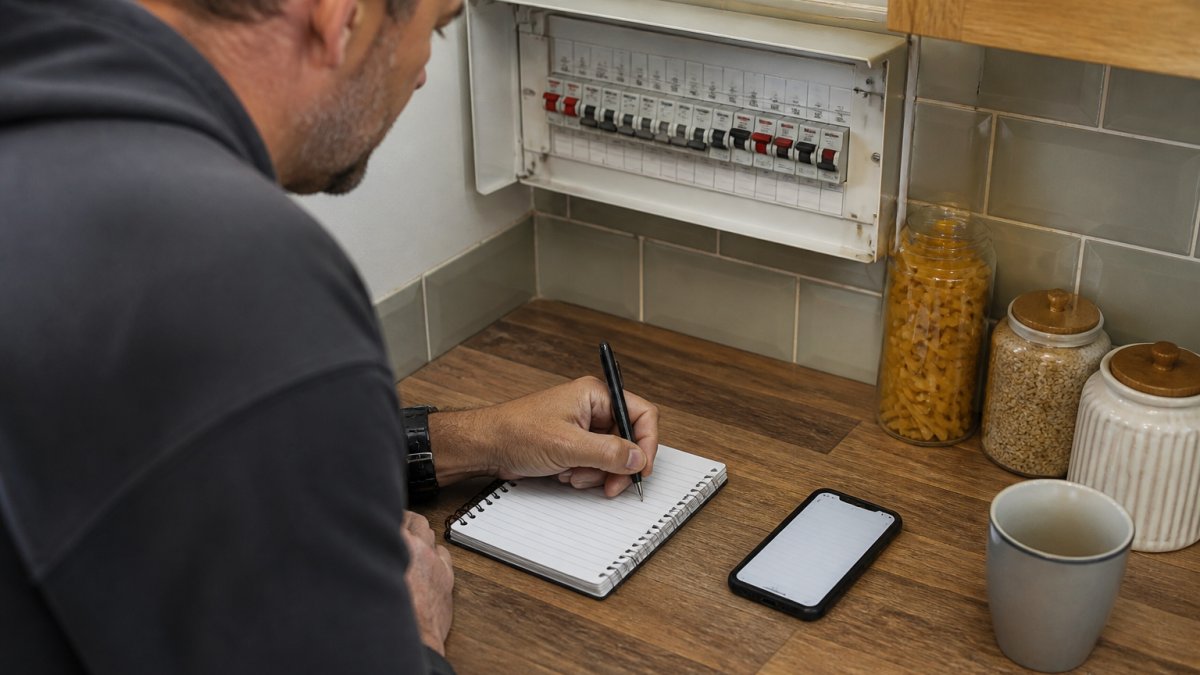
You do not need software. A notebook by the consumer unit works perfectly. Just keep the entries consistent.
| What to Record | Example Entry | Why It Helps |
|---|---|---|
| Date and time | Tues, 8:15pm | Shows whether the fault follows a routine |
| What happened | Kitchen lights flickered twice | Pins down the exact symptom |
| What was running | Oven and kettle on | Links the fault to load |
| Weather or recent work | Heavy rain | Flags moisture or damp issues |
| Action taken | Reset breaker once | Tracks how often it trips |
A good log does one job: it shows the pattern. That pattern is often the fastest route to the fault itself.
How Electricians Diagnose Electrical Faults That Come and Go
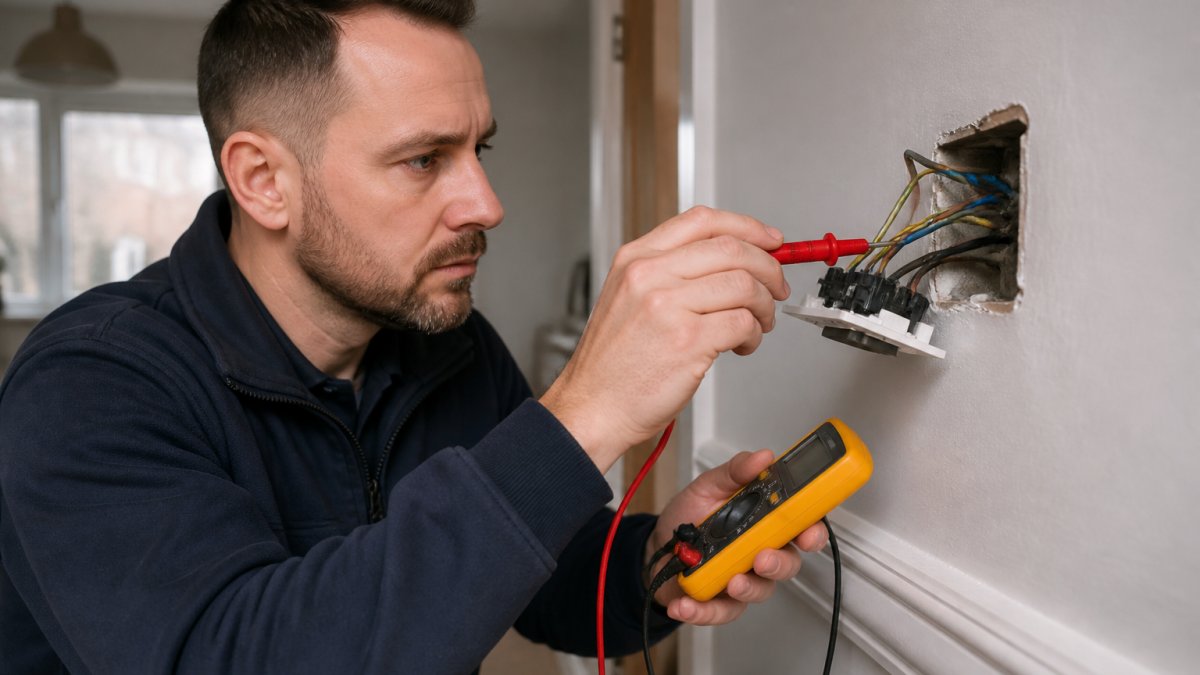
Electricians diagnose electrical faults that come and go using test instruments and a process, not guesswork. The aim is to recreate the fault under controlled conditions.
We start by reading your log to narrow the search. Then we test the circuit in stages.
- Insulation resistance testing to find breakdowns in cabling
- Continuity checks on suspected loose joints
- RCD and circuit breaker testing under load
- Thermal checks to spot connections running hot
The key is load. Many faults only appear when a circuit is working hard, so we test it that way rather than at rest. A fault that shows nothing on a quiet Tuesday may appear the moment the shower and oven run together.
Electrical Safety Checks at Home: What You Can Do Yourself
Electrical safety checks at home are mostly about spotting warning signs early, not testing wiring. A few habits catch problems before they become expensive.
- Press the test button on your RCD every few months (Spring forward into electrical safety)
- Look for cracked sockets, scorch marks or discoloured faceplates
- Keep an eye on cables that feel warm in use
- Avoid overloading extension leads with heaters and kettles
One check people skip: the RCD test. It takes seconds and confirms your main safety device still works.
If an RCD will not reset, or trips the moment you plug something in, stop and call a registered electrician. That is not a DIY fix.
When to Stop and Call a Registered Electrician
Call a registered electrician the moment a fault involves heat, burning smells, repeated tripping or anything inside the consumer unit. These are not jobs to solve by trial and error.
In the UK, electrical work in the home must meet BS 7671 wiring regulations, the standard behind safe installations. Work that falls under notifiable categories also needs to be certified, so using a registered professional protects you legally as well as physically.
We are Napit registered and work to the 18th Edition of BS 7671. That means our testing follows the current standard, and our engineers hold Level 3 NVQ qualifications plus 2391 testing and inspection certification.
The honest answer to "can I fix this myself?" is usually no, and that is fine. A fault log plus a qualified electrician is faster and safer than weeks of guessing. Most of our work comes from recommendations, largely because we tell people plainly what is wrong and what it will take to fix it.
Intermittent faults rarely fix themselves, and the ones that hide are often the ones worth catching early. If you are in Preston or the surrounding area and a fault keeps coming back, GF Electrical Services can test the circuit properly and give you a straight answer. Our Napit-registered, 18th Edition compliant engineers handle fault-finding, testing and inspection, and full electrical installations, all backed by public liability insurance. Contact GF Electrical Services to book a visit and get your home's electrics running safely again.
Frequently Asked Questions
What are the common signs of an intermittent electrical fault at home?
The most common intermittent electrical fault symptoms are lights that flicker or dim briefly, a circuit breaker or RCD that trips and resets without explanation, sockets that buzz or feel warm, and appliances that cut out and restart on their own. These signs often appear only under certain conditions, such as when a specific appliance runs or when the heating comes on, which is why noting when each one happens helps an electrician trace the cause faster.
Can I safely diagnose an intermittent electrical fault myself?
You can safely observe and record symptoms, check that plugs are fully inserted, and confirm which circuit is affected at the consumer unit. Anything beyond that, such as removing faceplates, testing continuity, or opening the consumer unit, should be left to a qualified electrician. Live testing carries real risk of shock, burns, or fire, and DIY work on fixed wiring can also invalidate home insurance if something goes wrong later.
How do electricians find faults that disappear before they arrive?
Electricians rely on the fault log you provide, then use insulation resistance testing, RCD trip-time tests, and clamp meters to measure circuits under load. They may also use thermal imaging to spot hot joints and plug-in energy monitors to log voltage dips over several days. Because intermittent electrical faults often only show under specific conditions, an electrician may need to replicate the trigger, such as running the shower and washing machine together, to confirm the cause.
What should I check before calling an electrician?
Before calling, confirm which circuits are affected, reset the tripped device once, and unplug recently added appliances to see if the fault stops. Check that no socket is overloaded and that extension leads are not daisy-chained. Write down when each fault happens, what was running at the time, and how long it lasted. This information, plus your electrical fault log template, helps the electrician arrive prepared and can cut diagnostic time on site.